

At a glance, comparing regions in the United States seems predictable. The coasts are often associated with urban development and economic activity, while the South and North are viewed through cultural or historical contrasts. However, when you compare states side by side in a structured way, these assumptions begin to break down.
What appears obvious at a regional level often becomes more nuanced when examined closely. Differences exist, but they are not always where people expect them to be.
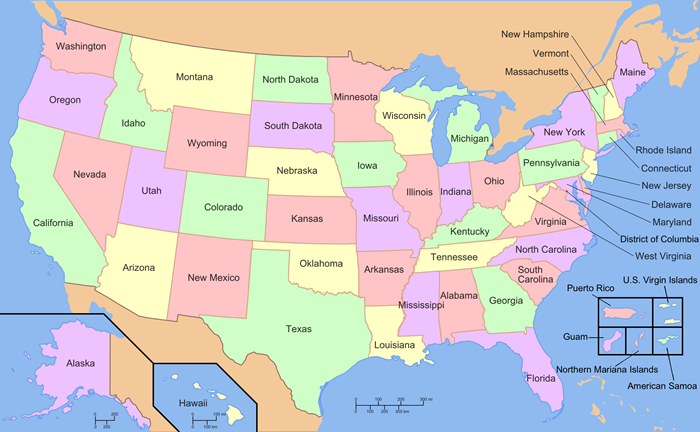
Moving Beyond Regional Stereotypes
Regional labels such as “East Coast,” “West Coast,” “South,” and “North” create broad categories that simplify comparison. While these categories are useful, they can also obscure important differences between individual states.
For example, two states within the same region may differ more from each other than from states in another region. This happens because identity is shaped by multiple factors, not just geographic grouping.
A structured comparison requires moving beyond these general labels.
Coast vs Coast: More Than Geography
Comparing coastal states often begins with economic and urban differences. Both coasts have major cities, access to trade routes, and strong economic activity. However, the similarities often end there.
The East Coast has a longer history of early settlement and development, which influences its infrastructure and institutional structure. The West Coast, by contrast, developed later, often with different economic drivers and patterns of expansion.
Climate, population distribution, and industry focus also vary significantly. These differences show that sharing a coastline does not create uniformity.
South vs North: Historical Layers Still Matter
The contrast between the South and North is often discussed in terms of history. While historical differences remain important, they do not fully explain current conditions.
Economic development, migration patterns, and policy decisions have reshaped many states. As a result, some Southern states may share economic similarities with Northern states, while others maintain distinct characteristics.
Cultural patterns also vary within each region, making broad comparisons less reliable.
Unexpected Similarities Across Regions
When you compare states side by side, similarities often appear in unexpected places.
For example:
- States with similar industries may share economic patterns regardless of location
- States with comparable geographic features may face similar environmental challenges
- Urban centers across different regions may function in similar ways
These similarities highlight the limitations of regional assumptions.
They show that factors such as economy and geography can outweigh regional identity.
Differences Within the Same Region
It is also important to recognize variation within regions.
Two neighboring states may differ in:
- Economic structure
- Population density
- Policy approach
- Cultural practices
These differences can be significant, even if the states share a border or regional classification.
This internal variation adds complexity to comparison.
Role of Geography in Shaping Outcomes
Geography continues to play a central role in shaping differences.
Coastal access, terrain, and climate influence how states develop. These factors affect industries, settlement patterns, and infrastructure.
However, geography does not act alone. It interacts with history and policy, creating outcomes that are not always predictable.
Economic Patterns That Cross Regions
Economic activity often creates connections across regions.
States that focus on similar industries may develop comparable economic structures, even if they are located far apart.
For example, technology-driven states may share characteristics regardless of whether they are on the coast or inland.
This shows that economic specialization can create similarities that override geographic distance.
Cultural Variation and Overlap
Cultural identity is often used to define regions, but it is not uniform.
Within each region, there are variations in language, traditions, and social behavior. At the same time, cultural overlap exists across regions due to migration and communication.
This creates a mix of distinct and shared cultural elements.
Understanding this balance is important for accurate comparison.
Conclusion
Coast vs coast and South vs North comparisons are useful starting points, but they do not capture the full picture.
A structured approach to comparing states side by side reveals both expected differences and surprising similarities. It shows that identity is shaped by a combination of geography, history, economy, and culture.
By examining these factors together, it becomes possible to move beyond assumptions and understand the true diversity within the United States.